Amazon
LaunchIt
Simplifying operational testing for fulfillment centers. A 0→1 enterprise platform that brought site setup, testing, and monitoring into one system, so teams could decide faster whether a site was ready to launch.
Project details
For NDA confidentiality purposes
This case study uses generalized language, and mock data to
protect proprietary information while preserving the design
process and outcomes.
 For NDA confidentiality purposes
UX impact
The problem
Readiness testing ran on scattered tools, manual workarounds, and spreadsheets, setup took days, and testers walked live sites carrying heavy laptops, so teams needed one system to set up, test, and monitor every site.
What I did
Designer on a 0→1 launch readiness platform. I led design for one system to set up sites, manage mock inventory, create test orders, and track results.

Led design for the whole system

Co-led decisions with product and engineering
Simplified complex technical workflows

Shaped the MVP under tight deadlines
Contextual inquiry (Site Visits)
Interviews only get you so far. I had to see the work where it happens.
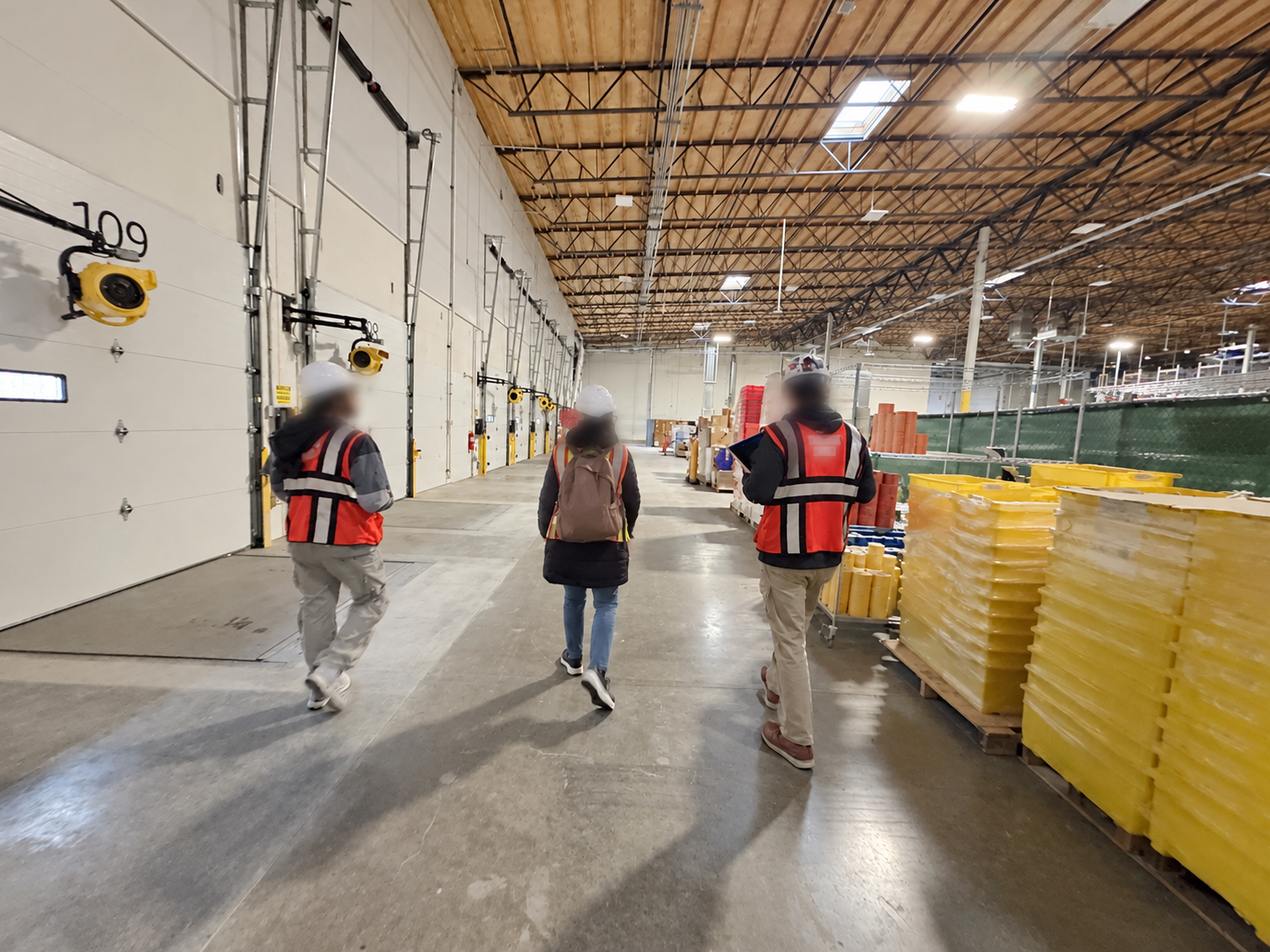
Over six months, we visited 5+ fulfillment centers across the country. I walked the floor and watched people run quality tests. Interviews only get you so far. Seeing it in person showed me where people got stuck, and which problems kept coming up.
What we learned:
- Setup took too long
- Too many tools to juggle
- People test while walking
- Noise and lighting changed how screens were used
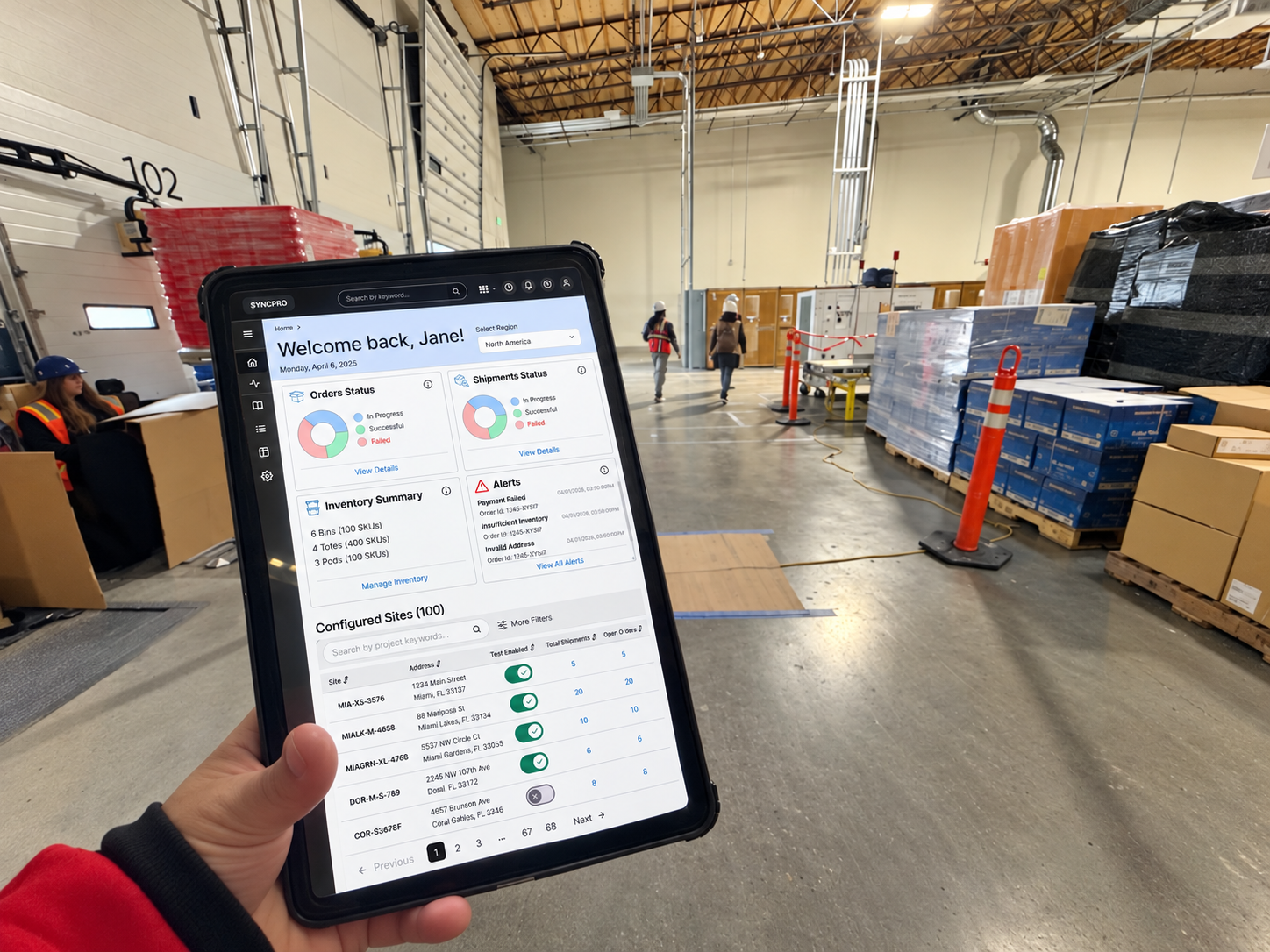
Workflow mapping, prototyping and responsive design
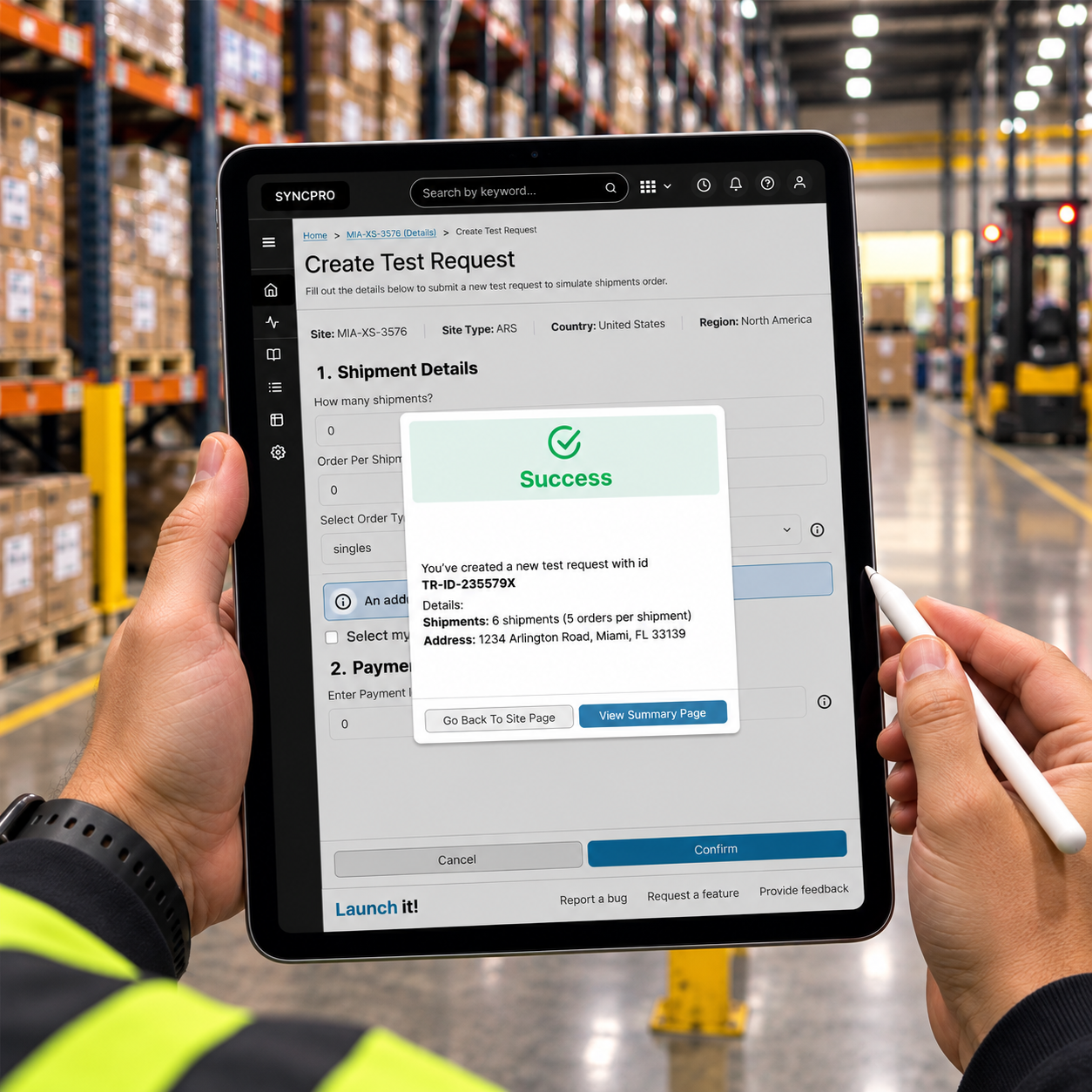
I mapped the testing workflow and picked what to build first. Then I tested clickable prototypes live, editing in Figma while users watched. Everything was tablet first, built for people on the move.
What we shaped:
- Setup that takes hours, not days
- Fewer tools to juggle
- Dashboards you can read at a glance
- Tablet-first layouts for people on the move
Responsive design
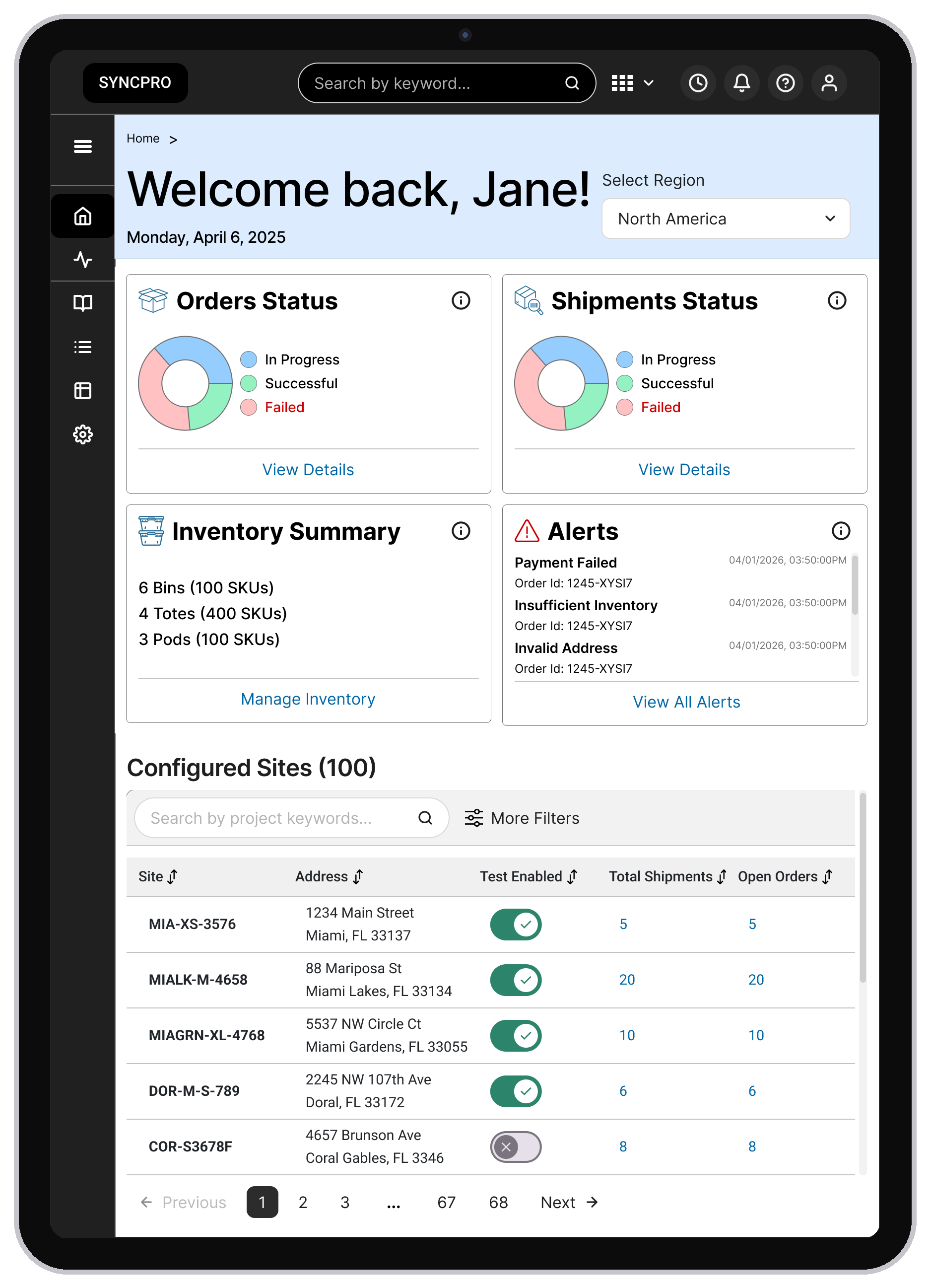
This is what I’m allowed to showcase.
Note: All Amazon confidential data has been replaced with mock data for these designs.
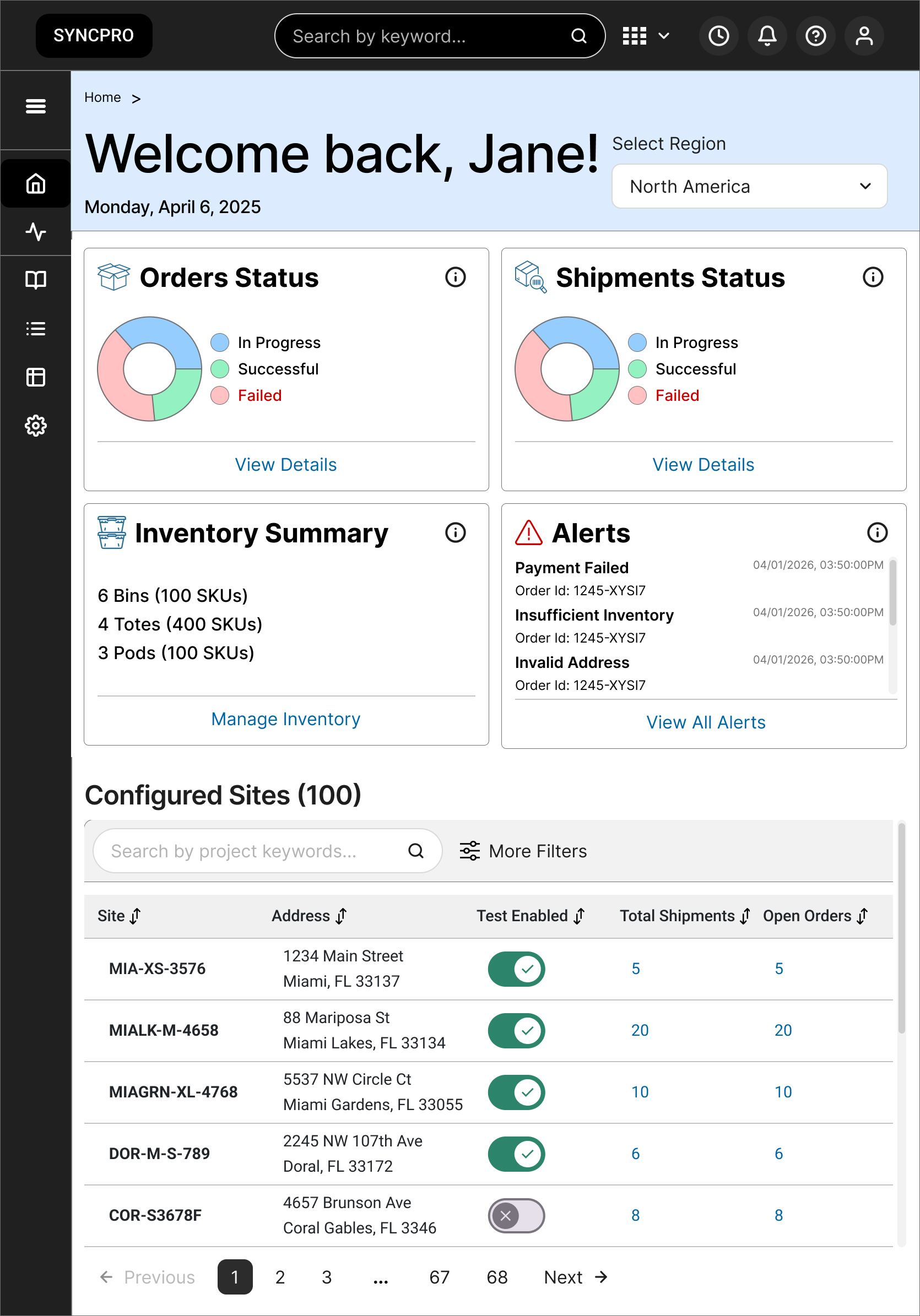
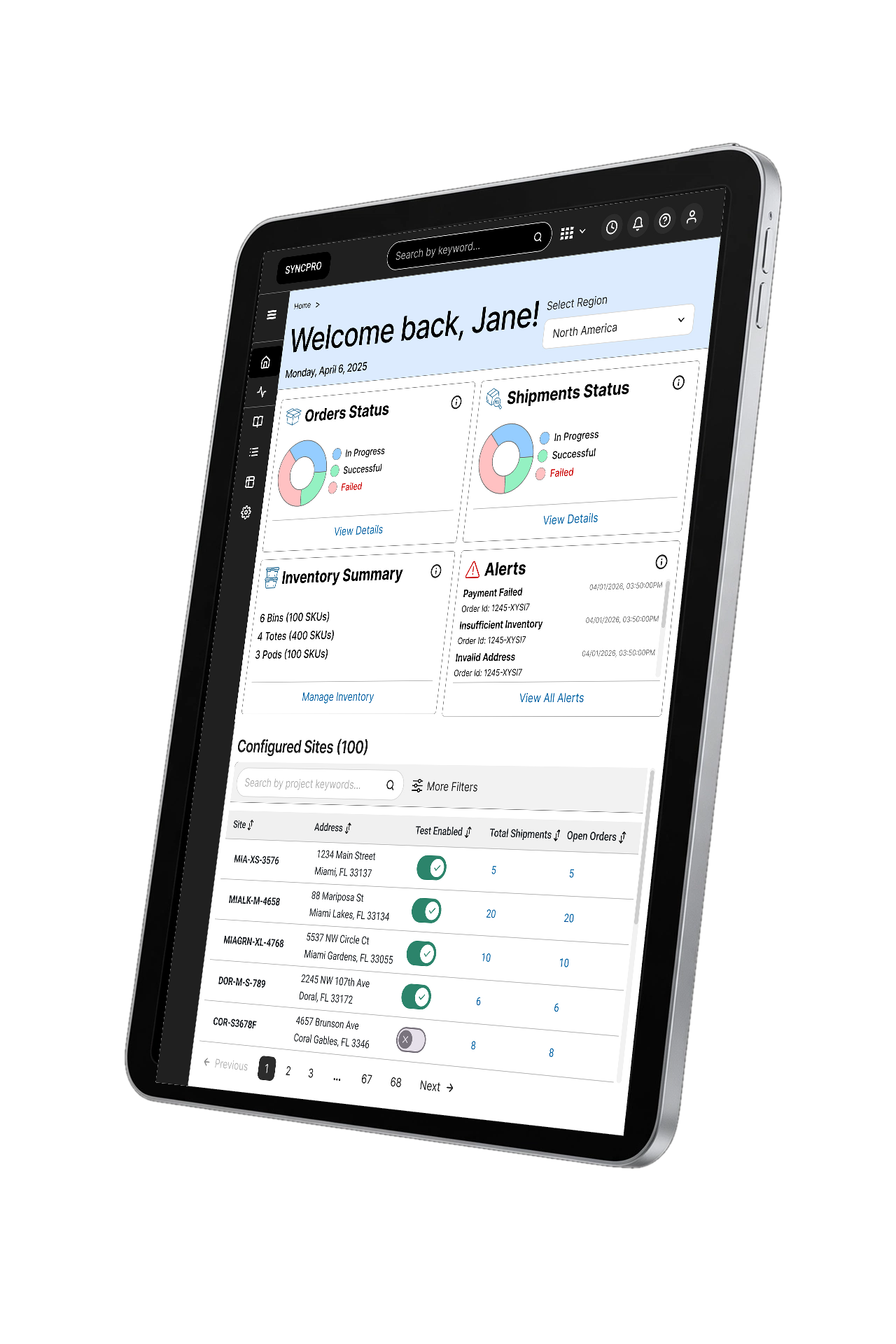
Orders, shipments, inventory, and alerts for every configured site in one view.
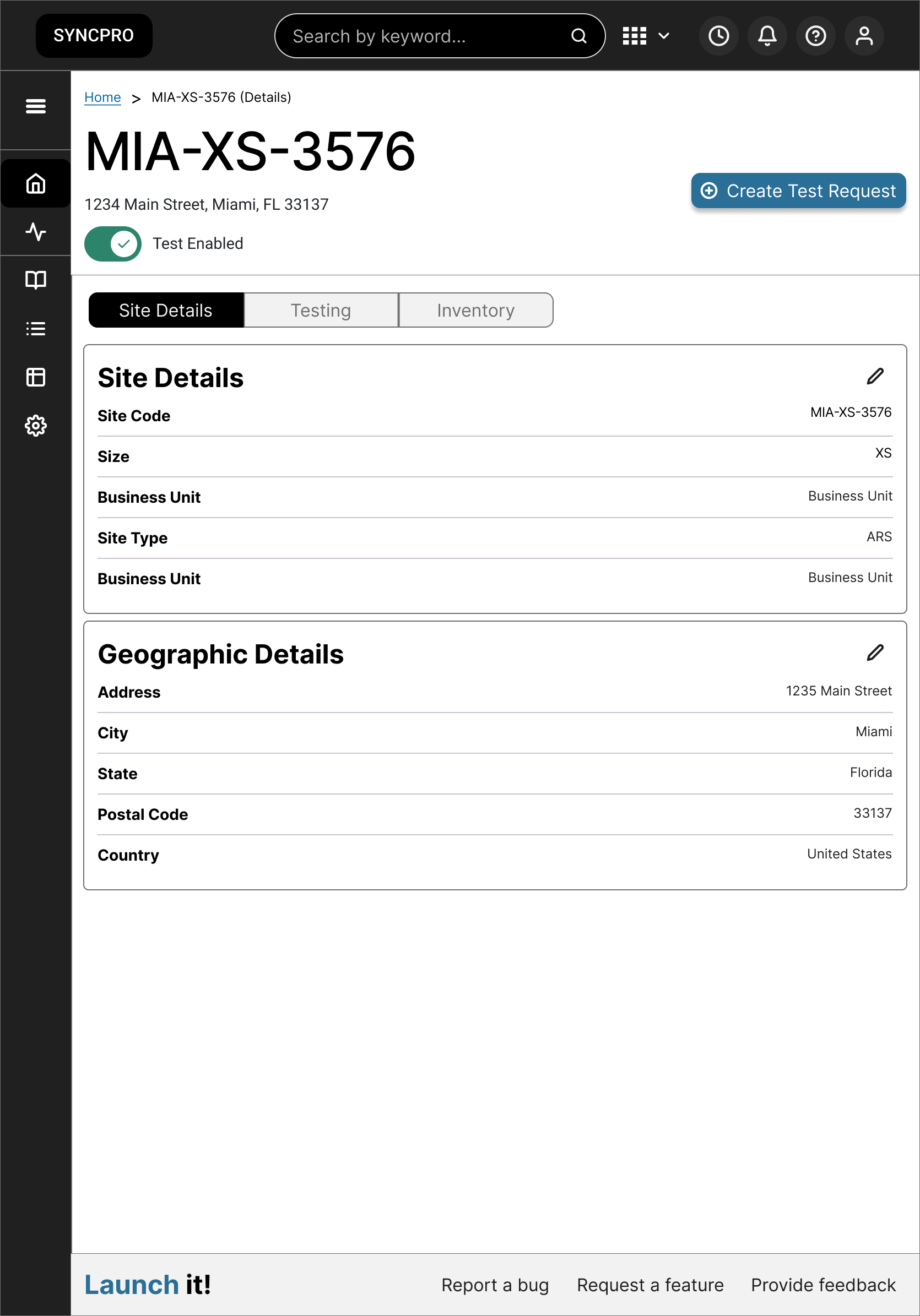
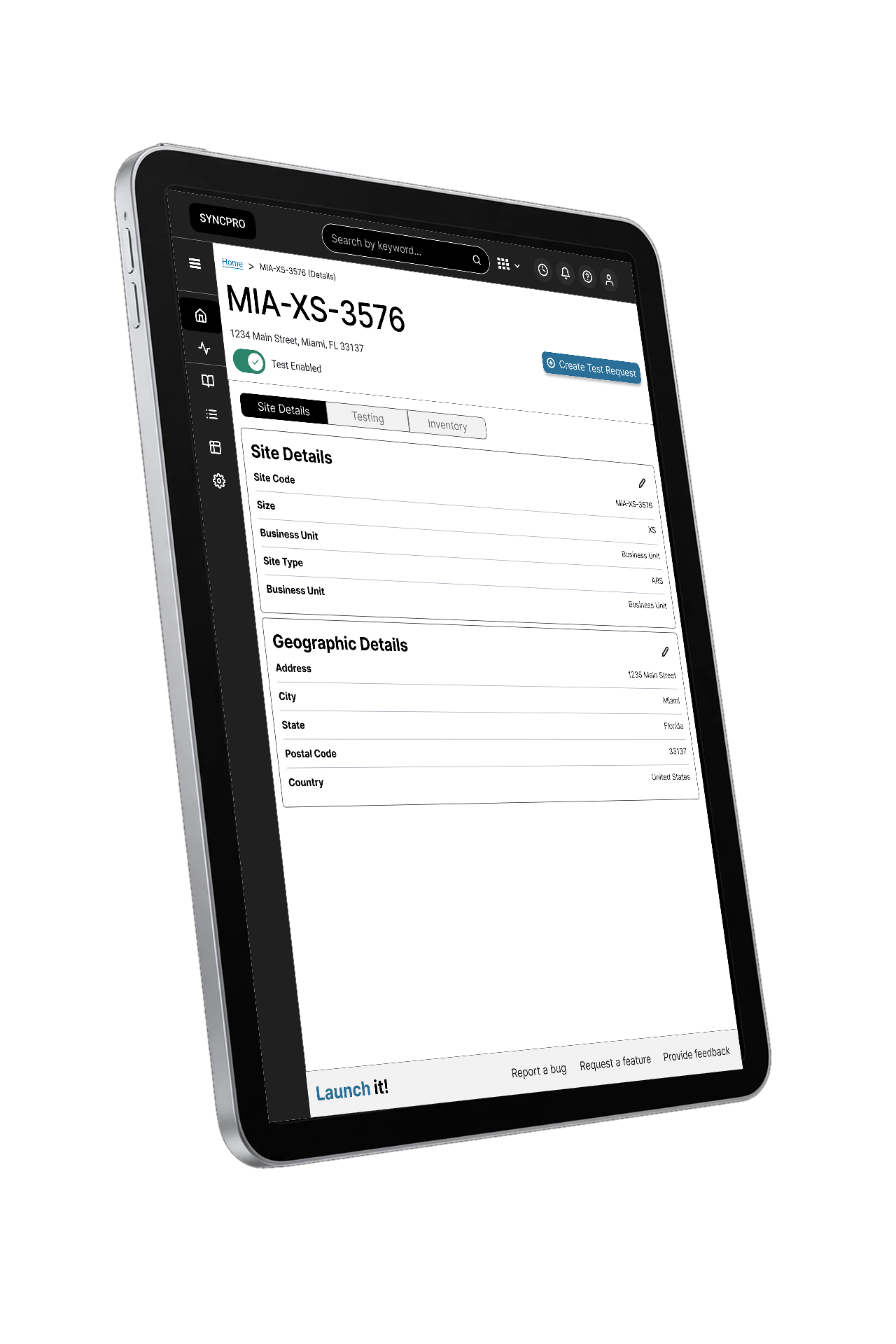
Site setup and geographic details, readable at a glance in the field.
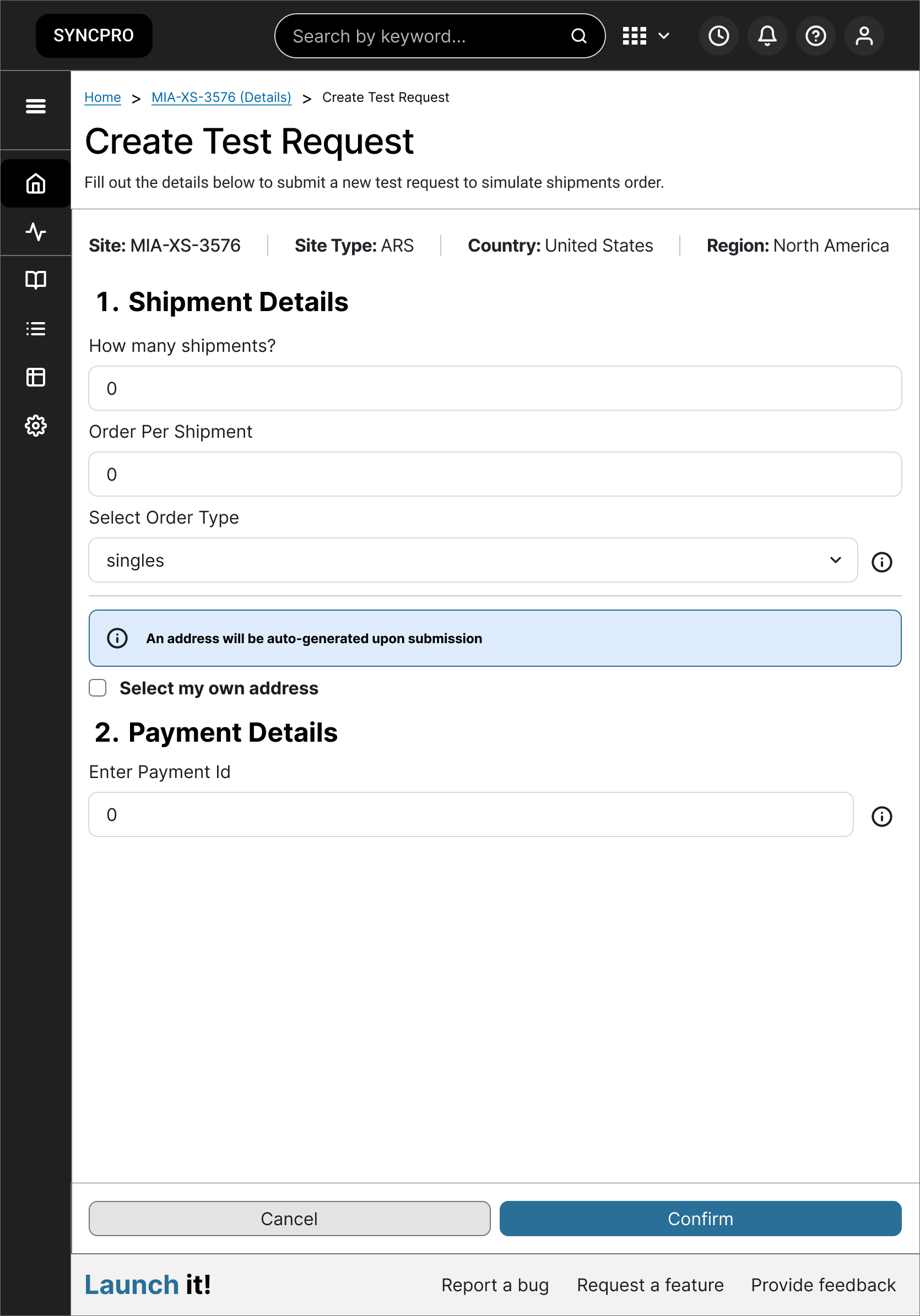
Shipment and payment details in one flow, built for people on the move.
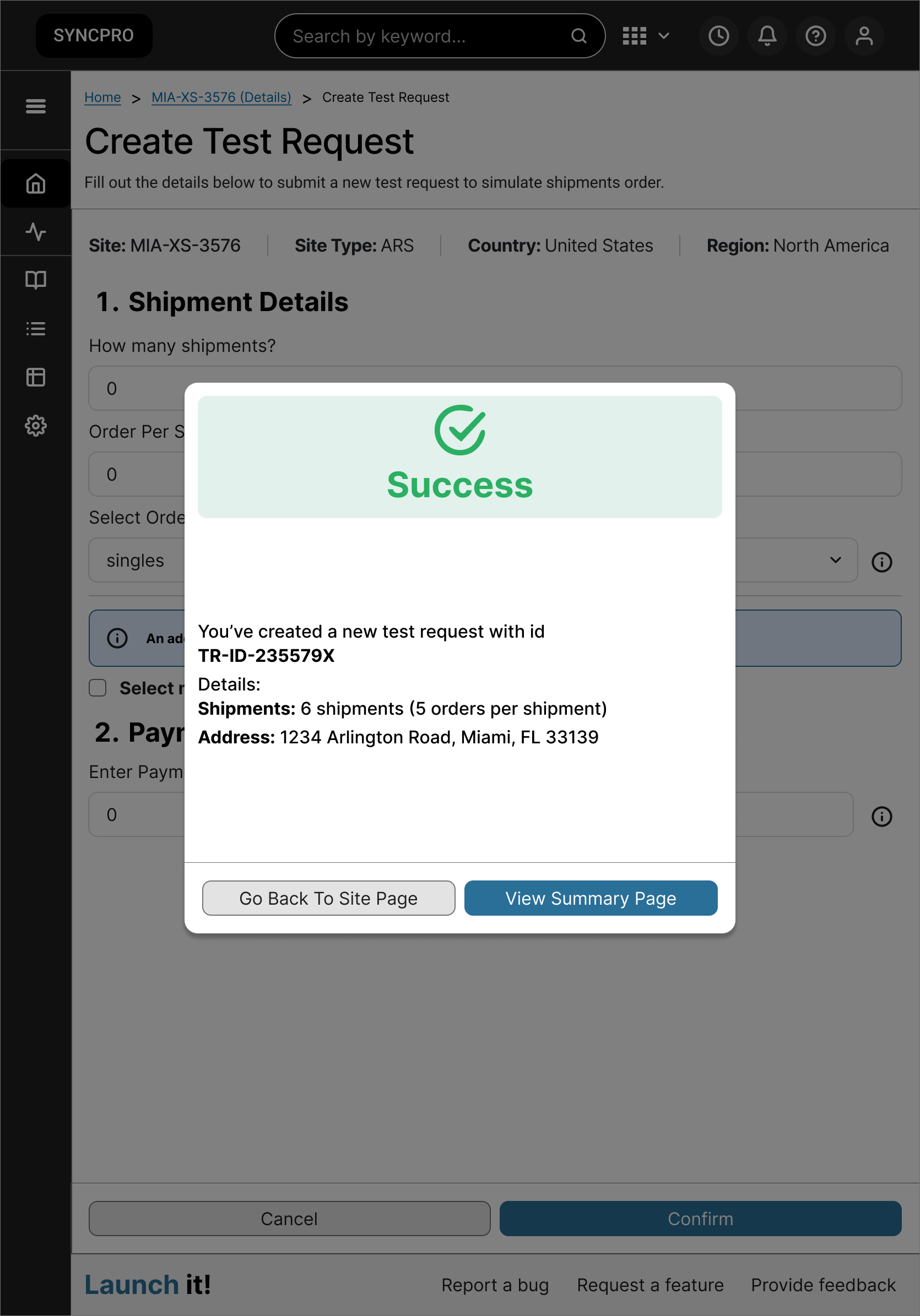
A clear success state with the request ID and a summary of what was created.
We simplified. We validated. We launched.
Results and impact
-
Faster test setup
Reduced a process that once took days into a workflow that could be completed in 1–2 hours.
-
Accessible in the field
Tablet-first responsive design improved readability and usability in active site environments.
-
User satisfaction
After launch, users rated the MVP 4.6/5 CSAT.
-
Business value
The MVP phase contributed to an estimated ~$10M in savings through simplification and automation.
Lessons learned
Priorities shifted and deadlines forced hard calls. Watching people work on site changed my decisions more than any meeting did. It pushed me toward tablet-first layouts, bigger touch targets, and fewer steps, because that is what the job required.